
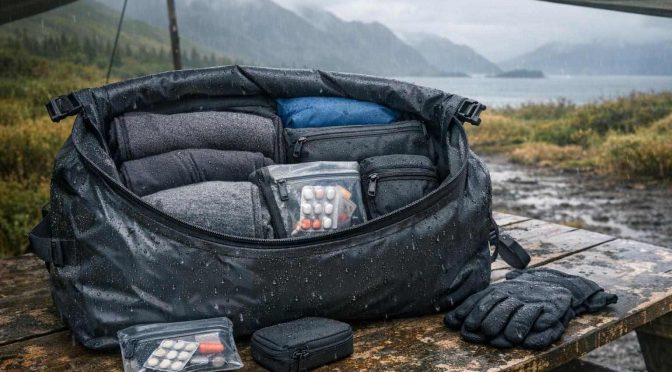
When adventuring to remote camps throughout Alaska for extended periods of time, the way one organizes their gear for the duration of their trip can mean the difference between a great and horrible experience. A person's dry bag is crucial to keeping essential items dry and organized for easy access. The items that one decides to bring in their personal dry bag are also important to a person's comfort in camp and can help to alleviate stress caused by problems that could have been easily prevented.
Understand Camp Operations First
Before you head off to find a bunch of additional small dry bags or many similar size pouches to add to your dry gear, figure out how the camp will operate during your time there. Will you have gear contained in a single tent or possibly spread out over many different sites that you will travel to and from. Will some of your gear travel by aircraft or by boat, in which case a single large dry bag is probably better than many smaller ones.
Larger bags mean one big load that is easy to carry to the camp site and to move around in the camp. Smaller dry bags however make sense when you will be using different items of gear throughout the day and thus want to set up separate pockets for different categories of items (sleeping gear/dry clothes/electronics etc). Using smaller dry bags is more efficient in terms of organization but less convenient in terms of transportation.
Be sure to get the latest gear list from your outfitter or trip coordinator. New items, closed packages, or supplies shared with other campers may need to be left behind due to airline or boat regulations.
Assess Waterproofing Based on Importance
When selecting items to bring on a trip for a remote Alaskan camp, consider the degree to which each will suffer from minor moisture. Most items such as an extra shirt will be fine. Others such as medications, important documents and electronics will need to be placed in dedicated waterproof bags or pouches to be stored within your main dry bag. Having these items stored in a separate, waterproof pouch within your main dry bag will come in handy should an item be lost or destroyed during your trip.
Roll-top dry bags are great for things like clothing because you can squeeze them down to a decent size. However, if you are planning to carry more delicate items, you will likely require a dry bag with stiffer sides to protect items from damage. Liners for your dry bag are a great way to keep wet items away from more sensitive items, however, I would not use them for extreme conditions.
Before leaving check the closure of the dry bag you have chosen. Fill it with normal household items, tie the top and check the dry bag after it has been moved about in order to test for leakage. Note that this test does not ensure that the dry bag will be used correctly to care for gear. Note also for possible problem areas such as tight straps, stiff buckle stanchions, etc.
Organize for Easy Access
Don't pack your dry bag as if you were going to die out there. Instead, pack the bag as if you were going on a weekend camping trip. Try to put the most used items at the top of the bag, such as gloves, balm, a headlamp, toothbrush and other oral hygiene items, shampoo and soap, etc. Things that you will not use on a regular basis can be placed at the bottom of the bag.
These are the sorts of specialist add-on bits and pieces that you can embed within your organizers to provide further customization and add more depth to how you will manage specific areas of your general content.
– A waterproof pouch for medications and important documents
– A compact bag for electronics and spare batteries
– A special section in your personal dry bag for your dry sleep gear or base layers to prevent these getting moist from your field gear.
– Personal care products in liquid-proof containers
– A small repair kit to mend broken straps or other items on the way.
– A designated waste bag for trash that you must transport out of the camp.
Make sure to leave enough room for any wet items to be put back in your bag as you travel. You might also consider bringing a separate dry sack for wet items to keep the rest of your gear from getting wet. Also be careful not to overstuff your sack as this can cause damage to your gear and make closing the sack difficult.
Know What to Keep Outside the Bag
You need to distinguish between what you can carry in your personal dry bag and what you can carry in your daypack. Items that you need to have ready access to should be carried in your daypack, not in the bottom of your personal dry bag where they could be difficult to find when it is cold and you are wearing gloves.
When camping don't make the mistake of throwing your sensitive gear in the corner of your tent assuming because you use it frequently that it must be ok to leave it exposed. Surfaces can get very muddy and wet whilst in camp. Use a small waterproof pouch for these sort of items and ensure you store the pouch in a consistent place so you can find it in the dark when you need to.
Food, attractants, and hunting gear are items best left under a guide's control. You don't want to be responsible for packing such items and then for tossing them as trash, potentially drawing wildlife to your camp. And as for camp hygiene and safety, such items could potentially put you and others at risk if not disposed of properly.
Prioritize Ethics and Practicality
A person's organization of their personal dry bag and survival gear can greatly aid in decision making. With all of the equipment necessary to stay warm and to function successfully, in a variety of conditions, a well organized camp allows for the trip leader to give instructions and for a person to assess a situation and make good choices in change of weather, in difficult terrain, when dealing with wildlife.
Hunting bear near Kodiak requires more than just the best equipment to be prepared for your hunt. Thoughtful and careful decisions must also be made regarding your activities to ensure that you are following all of the relevant laws regarding the hunt, as well as to ensure your safety and that of the animals. In addition to verifying the current hunting regulations and how to transport a harvested animal before your trip, it is also important to confirm all of the specific guidelines that your trip leader has regarding your movements, gear, etc. along with any other issues that may affect your hunt.
Be prepared and make sure to use sustainable items when packing for your trip, such as reusable containers. Make sure all trash is transported in a secured fashion and attempt to remove as much waste from the camp as is required by your guide.
Test Your Packing Setup
To really test your approach, pack up your whole dry bag a few days prior to your departure and set up a mock camp. Fill up the bag, shut it, and try to move it around with one hand. If you're using a strap, try carrying it on your shoulder. Can you easily find items while wearing gloves? If not, reorganize your bag to make the most of the space and avoid over-complicating with labels rather than a good system.
Consider making a list or taking pictures in order to be able to repack in due time. Label similar bags with simple identifiers on them instead of adding a lot of loose tags which could get lost or even get caught in branches while you are moving through the field. Inspect all parts of your gear in the days leading up to your departure for any signs of wear: seams, handles, buckles, roll-top closures and such.
Don't get caught with an oversized bag, a flimsy plastic bag trying to be a waterproof bag, mixing wet and dry gear, or not having the means to repair gear that you already have duplicated of.