
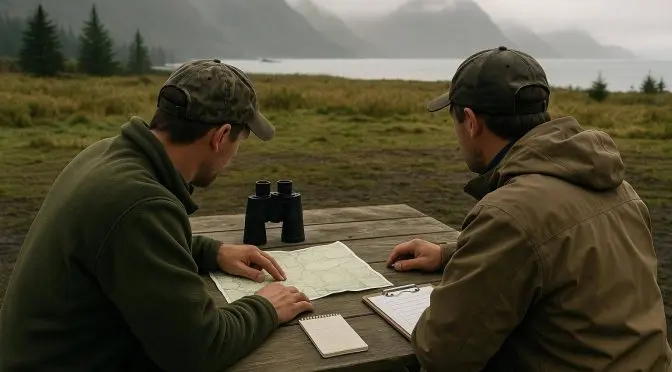
Planning for Ethical Kodiak Bear Hunting: Establishing Key Pre-Trip Agreements
In the world of bear hunting small details can significantly influence the outcome of bear hunters experience. One crucial aspect to address prior to bear hunters adventure is how to communicate when clarity is compromised. The unpredictable nature of factors such as weather, bear movements and visibility can reduce decision-making time to mere seconds. Establishing a pause signal among the hunting party is vital providing everyone the freedom to slow down and reconsider bear hunters actions without fear of judgement. This agreement not enhances the integrity of the hunt but also sets standards for responsible decisions uncertainty management and the preservation of wildlife and legal guidelines.
Establishing a Clear Pause Signal
When it comes to communication signals in the field assumptions can lead to situations. Signals should be easily understood given the terrain and weather conditions bear hunter might face. It is wise to consult the guide on what signal will be most recognizable in environments. The chosen signal-whether it is a shout of "Pause" or a raised hand-must clearly convey the need to stop reassess the situation and refrain from advancing or shooting until the guide provides further instructions.
Simplicity is key here. Complicated codes can become muddled particularly when sound is muffled by hearing protection or wind. It is also essential to differentiate between advice from the guide and directives that're mandatory for safety. A safety command must be absolute ensuring that this signal is not a replacement for instructions but rather a means to eliminate confusion during critical moments.
Clarifying Ethical Standards Before the Hunt
Decisions about what constitutes an opportunity should be pre-established rather than made impulsively in the moment. Engaging in discussions with the guide about their criteria for assessing factors such as identification, visibility, distance and shot angle is critical. While there is no need for a script for every potential scenario bear hunters should collectively agree on the conditions that automatically disqualify an opportunity.
For instance a certain level of ambiguity in animal identification obstructed view of areas, unsafe proximity of other hunters or poor visibility must all be dealt with firmly. The key question to pose is: what would prompt bear hunter or the guide to abort the pursuit even if the bear appears sizable or the moment seems rare?
Anticipating and Adapting to Changing Conditions
The weather and rugged landscape of Kodiak can shift dramatically in a time necessitating flexibility in bear hunters plans. Prior to embarking on bear hunters hunt it is advisable to explore how weather conditions – be it rain, fog or strong winds – could influence bear hunters decisions and planned routes. Understanding where communication might falter will also ensure that the team can regroup effectively should visibility diminish.
Than trying to foresee every potential problem it is paramount to agree on responses be it waiting for conditions to improve, changing positions or possibly ending the hunt altogether. Should there be any confusion about the agreed-upon actions repeat the expectations for confirmation. For example clarify, "If visibility decreases bear hunters will halt and return to our designated spot right?" Ensuring bear hunters share the same understanding reinforces safety in situations.
Don't overlook the effect of fatigue either. Extended travel, wet clothing and inadequate rest can impair focus. Clarifying bear hunters level of concentration should be encouraged – if bear hunter is feeling the strain it is important to voice that on.
Confirm Regulations Close to Departure
Bear hunting comes with a set of regulations that can evolve. While a conversation about these rules months in advance aids in preparation it is essential to revisit them just before bear hunters trip. Make sure to check regulations from reliable sources such as Alaskas official guidelines, as well as any federal policies that pertain to bear hunters hunt. Always consult the guide on what documentation bear hunter will need to carry in the field.
Avoid depending on memories of hunts or second-hand stories when navigating legalities; they can lead to misunderstandings. Ensure bear hunter specifically understands what is required for the area bear hunter will be hunting in. If there is any uncertainty about a regulation seeking clarification in advance can prevent issues that might arise during the hunt. Keeping a written record of checked regulations and sources can be beneficial should discrepancies arise, although it does not supersede guidelines.
Integrating Recovery, into Your Strategy
When we talk about hunting we must plan for what comes after a bear is hit. We need to explain how our group will act if a bear is wounded or down. We should pick someone to lead the tracking and point out any conditions that could stop the pursuit because it is unsafe or illegal.
Talking about problems before we even set out is essential. It helps us think carefully when we consider a shot. Things like terrain visibility and recovery conditions must carry a lot of weight in our decisions, not the quick look of a target. If our guide says the situation is too uncertain we should trust their judgment. Not ask for an explanation right then. Remember, missing a chance can feel bad but rushing can cause harm to everyone, including the bear.
Finalize Your Decision Framework
Prior to your hunt review this decision checklist with your guide:
– Which exact signal or phrase signals a pause or no shot?
– Which conditions about identification and visibility must be satisfied?
– Which environmental changes call for ending the hunt?
– Which current regulations apply in our hunting area?
– What is the set protocol for dealing with a wounded animal?
– How can any member of the group stop the action without needing to explain on the spot?
Talking through these questions together ensures that every person is ready when many challenges from nature arise.
Good hunting habits are usually set by limits we put on ourselves: waiting patiently refusing shots and recognizing legal, versus ethical choices.
Clear communication keeps these limits in place when the pressure of a hunt rises letting you trust both your guides knowledge and your own sense of responsibility.